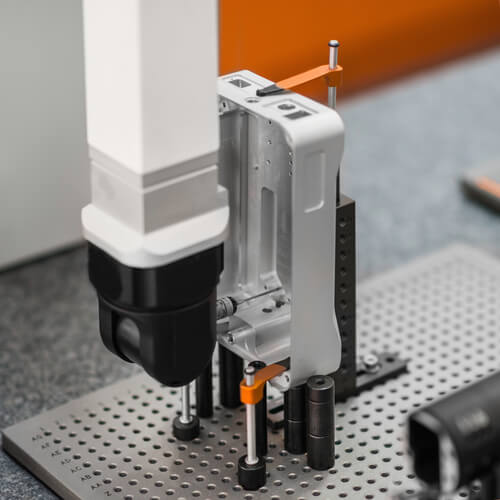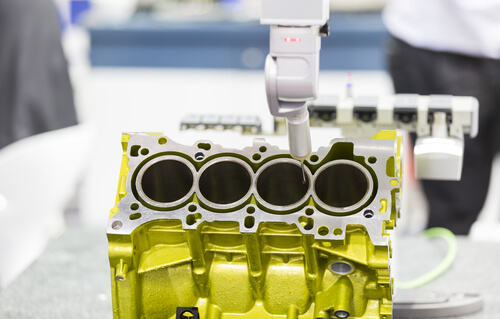




Universal metrology automation solutions can quickly authenticate dimensional conformance on anything from sub-millimeter solder joints to precision-machined components, molded plastics and large aerospace castings. Coupled with a metrology integrator, it can offer countless system configurations by using streamline automation software to link dissimilar software and hardware with a general interface, helping to make intelligent decisions.
- Air Gages
- Bore gages
- Calipers
- Calibration Equipment
- CMMs Coordinate Measuring
- CMM Sensors, Probes & Styli
- Computed Tomography – CT Scanners
- Concentricity Gages
- Contour Measurement
- CUSTOM GAGES & FIXTURING
- CYLINDRICAL GO / NO GO / MASTERS
- Data Collection & SPC
- Depth Gages
- Fixtures & Part Holding CMM, Vision, Optical
- Flaw Detection – Automated
- Force & Torque Gages
- Gage Blocks
- Gear & Spine Measurement
- GRANITE SURFACE PLATES, SQUARES & PARRALLELS
- HARDNESS TESTERS
- Height Gages
- HEX, HEXALOBE GAGES & SQUARE GAGES
- ID / OD GAGES & SNAP GAGES
- Indicators & Comparator Stands
- Laser Micrometers
- Layout and Shopfloor
- MICROMETERS
- MICROSCOPES & BORESCOPES
- Optical Comparators, Overlay Charts and Readouts
- Robotics and Automation
- ROUNDNESS & FORM
- SHAFT MEASUREMENT
- Structured Light 3D Analysis
- Surface Roughness Testers
- Thread Gages
- Video Measuring Machines
Blog
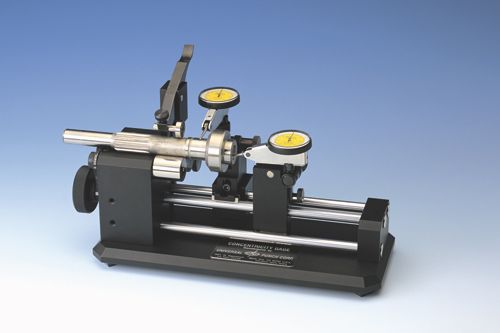
Product Spotlight: Universal Punch Series K1 Concentricity Gages
For a long time, concentricity gages have been utilized for inspection purposes. Oftentimes, they are used to inspect flat, internal, and external surfaces of rotating parts. This type of equipment is usually centrelessly mounted on three rollers, in type RPG micro, RPG mini, RPG AL, and RPG. Concentricity gages feature a robust design, with pre-loaded roller bearings designed to increase the longevity of the gage. Today, these gages are available in a variety of designs and sizes to fit diameters up to 240 mm. If you are looking to get a concentricity gage, you should consider Universal Punch Series K1 Concentricity Gages. Let’s find out more about this fantastic product!
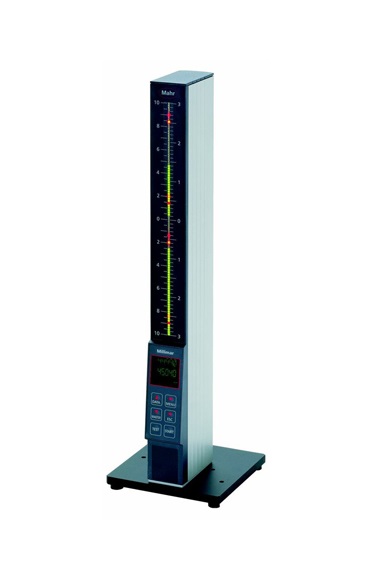
Product Spotlight: Mahr Federal S1840 Air Column Amplifier
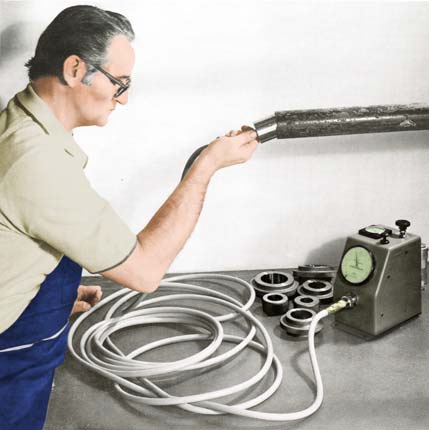
Air gaging is a powerful metrology method and first started ensuring quality in the late 1910s. Early versions of such systems were regulated by bubbling air via a level of water within a cylinder, in which air was also passed. The technique utilizes compressed air to measure changes in flow rates and pressure. Oftentimes, air gages are employed in tests where the distances between a workpiece and the precision orifices needed to be measured.
Air gages have the ability to measure small tolerances because of the reliability and magnification they can provide. A resolution as small as 0.00002 inch can be achieved! If you need to measure extremely thin-walled parts for soft materials, air gaging is the noncontact solution you can count on. If you are looking for an air column amplifier, you should consider the Mahr Federal S1840 Air Column Amplifier. Let’s find out more about this amazing product in this product spotlight!
Top Tips For Inspecting CMM Touch Probe Accuracy
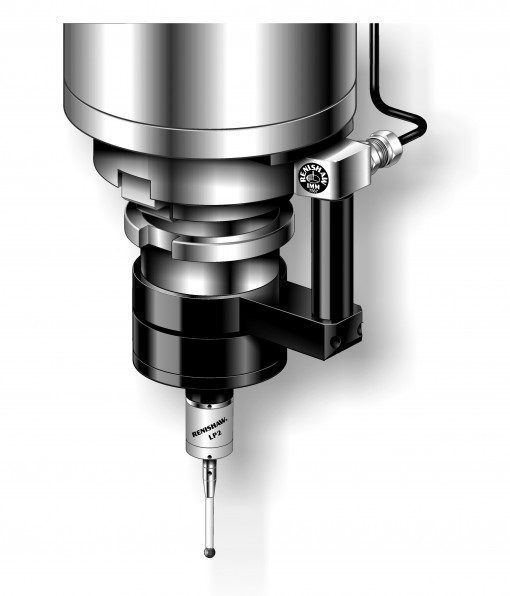
There’s always a way to know if the tool you’re using is doing the right job. Take an example of the screwdriver. If the screws are held firmly and can be screwed on and off successfully, then you know that the tool is working perfectly. But how do we know about CMM touch probe accuracy? How will you know if this high tech tool is functioning well and efficiently? A CMM probe is a complex device you place on the business end of your CMM. This device has lots of internal components that cannot be seen and are very delicate and susceptible to damage. These components can also easily go out of adjustment. In order to have a clear understanding of this, we’ll use the screwdriver analogy and think of the CMM probe as a screwdriver.
Understanding How Air Gaging Works
Air gaging works according to a law of physics that states pressure and flow are directly proportionate to clearance, which then react inversely to each other. This means that when clearance decreases, air flow and air pressure also decrease and increase respectively. When clearance increases, air flow and air pressure will increase and decrease proportionately. This is usually accomplished by regulating air flow via some sort of restriction. Two common options include a jeweled orifice or a needle valve. With that in mind, one will be able to increase back pressure and reduce air flow by bringing the workpiece (the obstruction) closer to the nozzle. If the nozzle becomes completely obstructed, there will be zero flow. Regulated air and back pressure will also be at the same level.
How To Save Time And Money When Using CMMs For Quality Control
The most delicate and important inspections are dedicated to coordinate measuring machines (CMMs). CMMs for quality control are a common choice for measuring complex, delicate parts. However, just like other aspects in manufacturing, there are significant costs and time one has to consider. Let’s have a closer look into the time and costs required to operate a CMM.
Why The Aerospace Manufacturing Industry Can Benefit From Automated Scanning Solutions
When it comes to advanced aerospace manufacturing, the industry can be a competitive one. Driving innovation has always been one of the key contributors to the longevity of the industry. A wide variety of aerospace research organizations out there that are involved in the testing and designing solutions to help develop aircraft parts more efficiently. As the industry continues to move forward, determining how to leverage scanning solutions, which are automated, to improve throughput and speed are of utmost importance.
Due to a large production volume, a wide variety of automobile manufacturing companies have embraced automation. Aircraft manufacturers, on the other hand, are low-volume producers and that’s why the adoption of automation technologies was delayed. However, the trend is changing. More aerospace organizations have started to make use of automation in lower-volume production markets. Let’s find out more on how the aerospace industry can benefit from automated scanning solutions.
Do You Need Traditional CMM Or 3D Scanners?
For more than five decades, the coordinate measuring machine (CMM) has been the point of reference for accuracy in measuring compact objects. However, in the last two decades, a new technology emerged known as 3D laser scanning. The new technology arrived on the scene with more point capability, power, size and price value that are way better than traditional CMM technology. Companies have been relying on CMMs or 3D scanners to collect vital data and measurements on parts to ensure they are accurate and eliminate any inconsistencies.
Understanding The Different Types Of Contact And Non-Contact Inspection Systems
Today there is a growing trend towards miniaturization especially in the electronics, medical device and computer industries. If you are involved in one of these industries, you need to ask yourself which inspection system best meets your requirements. Between the contact and noncontact inspection systems, which type should you choose? The resurgence of match-fitting and selective assembly practices which depend on more precise measurement data, makes the question as timely as ever.
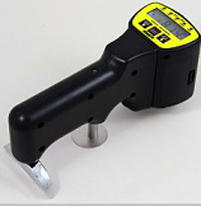
Product Spotlight: Phase II PHT-5100 Digital Barcol Impressor Hardness Tester
Hardness is not an elementary physical property. It is more of a characteristic of a material. Hardness is defined as an object’s ability to resist indentation. Its hardness is then measured by the irreversible depth of the indentation. When utilizing a load and a certain indenter, one usually looks out for the size of the indentation. The smaller the indentation, the harder that part will be.
With that in mind, hardness testing is used for two general characterizations, which are functionality and material characteristics. You can use hardness testing for predicting tensile strength, testing wear resistance, testing resistance to impact, testing hardenability, and more. Before a test is conducted, scale, thickness, sample size, material, etc., are some of the factors that will be considered prior to selecting the hardness testing method. In this product spotlight, you will find out more about an excellent hardness testing tool that can make this task easier. Introducing the Phase II PHT-5100 Digital Barcol Impressor Hardness Tester.
Tackling The Issue Of Increasing Pressure On Tolerances
Parts manufactured by the aerospace and automotive industries are becoming more complex due to technology advancement. Tolerances that should keep up with metrology standards and quality control are now increasingly optimized and sophisticated. Moreover, customers need their dealers to ensure their own control in compliance. All these requirements put a lot of pressure on quality control teams and metrology. This post will explore how we can deal with constantly increasing pressure on tolerances. First of all, let’s take a look at the major reasons for evolution in quality control requirements in the aerospace and automotive industries.
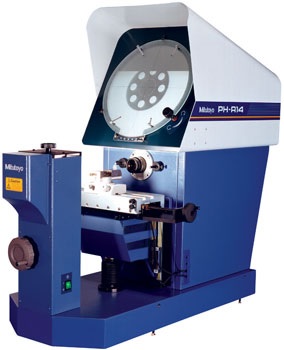
What Can Optical Comparators Do For You?
Optical comparators are used to magnify an image of a part to gather a tremendous amount of information about that particular part in a short time. For those who are not very familiar with these kinds of machines, optical comparators are measurement tools that magnify images onto a glass screen using mirrors, lenses, and illumination sources for the purpose of making two dimension measurements.
Optical comparators have been used for more than five decades and they still remain a cost-effective and versatile technology for monitoring the quality and processes of a wide range of manufactured parts. Over the years, optical comparators have evolved into full-featured equipment that uses modern optical, electrical and mechanical technology to maximize cost savings and minimize inspection time. So, why should you invest in optical comparators?
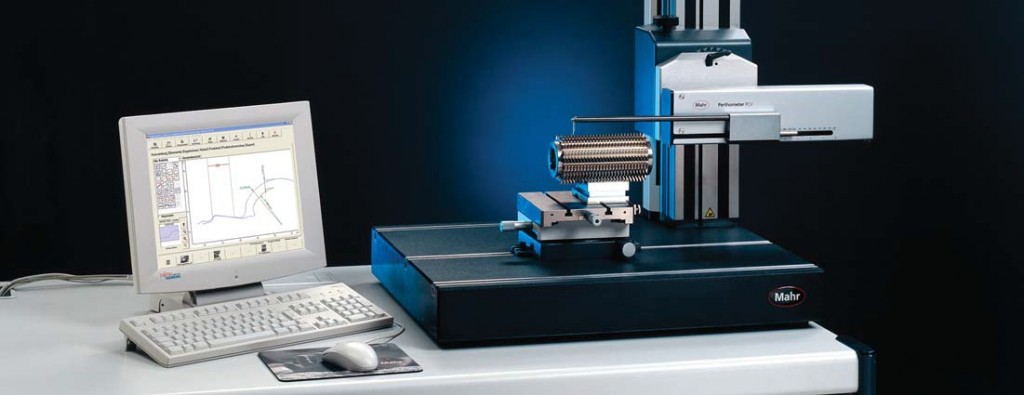
Product Spotlight: Mahr MarSurf XC 20
If you can’t measure it, how can you make it? When it comes to validation and inspection, this is something you need to keep in mind. Today, industry specialists need to measure contour lines. These lines refer to edges and lines that bound or define an object or shape. Stylus method has come of age and is now used to evaluate and detect profiles, as well as accurately determining the contour geometry. If you are looking to get a precision contour measurement system for your shop, you can never go wrong with Mahr MarSurf XC 20. Let’s find out more about it in this product spotlight!
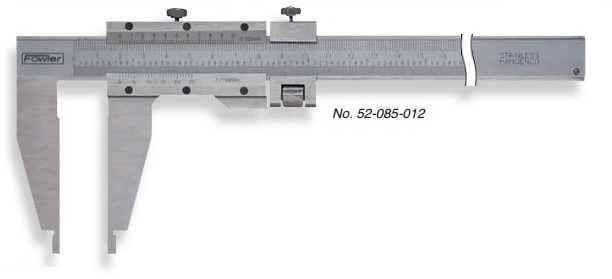
How To Handle And Maintain Vernier Calipers For Error Prevention
Vernier calipers are measuring instruments required for precise reading of machine parts or fittings. Routine care and maintenance is very important to maintain the consistency and functionality of a vernier caliper. Along with keeping it in a properly allocated space, there are a few maintenance steps one must take to keep your vernier caliper from malfunctioning.
Familiarize Yourself With Micrometers
If you work in some industry, which deals in small fittings or parts, you must know the importance of an extremely precise measurement. For such a purpose, we require an instrument like micrometer to get exact readings, which is important for accurate end results.