



Welcome To Coordinate Metrology 101

coordinate metrology

The best way to think about a coordinate system is to think of an elevation map with its referencing system that uses numbers and letters to help the map reader select a very precise point on the map. This coordinate system is the backbone of coordinate metrology that in turn is used in Coordinate Measuring Machines or CMMs that ensure that products coming off the manufacturing line meet very precise quality standards. The coordinate system is an invention of Rene Descartes, a French mathematician, and philosopher who created the system in the 16th century. Here are some of the basic terms that you may hear in coordinate metrology and their meanings.

Coordinate Measuring Machines

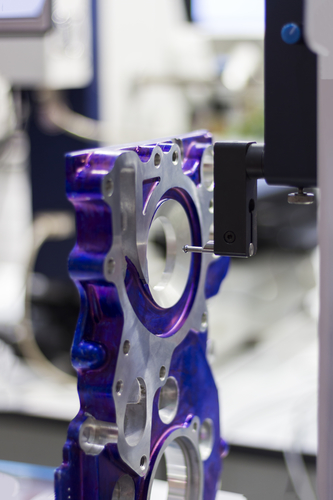
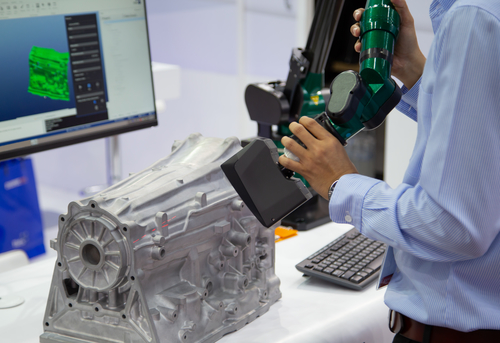
Coordinate Measuring Machines or CMMs are precision measuring machines that use the coordinate system to measure the surfaces of a product. CMMs do this by running a probe (which could be mechanical, laser or optical) along a surface and the data collected is then relayed to a data reader. The probe can either be manually controlled by an operator or can be computer controlled. Typically, CMMs will be used alongside other measuring tools such as CT scanners.

Datum

Another common term that you are likely to hear is datum which refers to points on the coordinate system. To use the earlier example of a street map, the datum can be a hotel or a river that is featured on a map. In the world of coordinate metrology, the datum, in this case, might be a hole (on a product) or a protrusion. The CMMs precisely map these points and uses them to ensure that there is consistency from one part to another.

Translation

This refers to the process of determining the space between one feature on the product to another. To use the map analogy again, this is like moving from the river to the hotel and then on to a third point. In this movement, your starting point changes (from the river and then from the hotel). This shift of the starting point from one location to another is what is called translation. Going back to CMMs, the probe acts like your finger on the map and moves from one point to another on the surface of the product, essentially translating from point to point.

Rotation

Rotation is best understood by using the analogy of the map once more. When moving from one point to another, you will realize that not all points are located at right angles to where you are. What this means is that once you translate from the river to the hotel, you might realize that your third destination is not parallel to the hotel. If you were using a map, you would rotate the key to be parallel to your point of origin thus allowing you to measure the distance between your new point of origin and your next destination. CMM machines do this exact process when moving from point to point and measuring the distance from one datum to another.

These are just some of the terms that you may encounter when learning about coordinate metrology. All these terms refer to processes that make it possible for precision instruments like CMMs to measure product surfaces and ensure that parts conform to a very specific quality standard.

The Job Of Quality Control Specialists Is Easier With These Tools

quality control specialist tools

Although most people do not quite understand the role of quality control specialists in manufacturing processes, the reality is that they play a vital role in ensuring that we are all safe. For example, a vehicle part that is not manufactured to the correct standards could have serious repercussions for the driver of the vehicle if that part ever ended up in a car. Luckily, quality control specialists are able to ensure that for the most part, manufacturing processes adhere to the correct standards. To do these quality control checks, quality control specialists rely on a variety of tools and machines to do their job. Read on to learn about the various tools that are vital to this role.

Hand-held Tools

There are a variety of hand-held tools that quality controllers use in their work. These range from gages, slide-calipers, micrometers, and indicators. If you visit a typical manufacturing plant, you might notice quality control specialists randomly checking parts off the assembly line using these tools. Handheld tools offer great flexibility to these specialists, allowing them to walk around the manufacturing line and testing parts at different points of the manufacturing process. Another great benefit of these handheld tools is that they are easy to use and people quickly learn how to use them without a lengthy training process.

Fixed Coordinate Measuring Machine (CMM)

Coordinate measuring machines or CMM are machines that give a very precise measurement of surfaces by running a probe over the surface of the part. These probes can either be mechanical, laser or optical depending on the degree of precision that is required. These CMM machines are fixed thus are likely to be used at one point. This means that products being analyzed are likely to be brought to the unit unlike the hand held devises that the quality control specialist can walk around with. Fixed CMMs are very precise and can also be linked to data processing machines allowing quality control specialist to analyze quality control data across different periods and different production lines.

Portable CMMs

These machines go a step further and give quality control specialists the ability to move around with the CMM while at the same time enjoying the precision that comes with CMM. Portable CMM tools are however sensitive to environments where there are strong vibrations (such as manufacturing plants that use big machines) and thus cannot be used in all manufacturing environments.

3-D Scanners

3-D scanners offer greater precision and flexibility without any of the limitations that come with portable CMM machines. For example, 3-D scanners are not affected by vibrations or temperature variations and thus are likely to work in a wider range of manufacturing environments. 3-D scanners are also suited for complex manufacturing processes.

Quality control specialists rely on some or all of these machines to ensure that the manufacturing process continuously produces products that meet very precise specifications.

How To Avoid Buying The Wrong Bore Gage

bore gage

Bore gage is a collective term that refers to tools that are used to give very precise measurements of holes. There are many reasons why a manufacturing process would want to have a very precise measurement of holes. For example, the quality control process of a manufacturing plant might be very interested in measuring holes in a given part that is being produced, especially if that part is designed to fit into another part.

Any deviation from the set size would have costly implications for the manufacturer and therefore the quality control process has to use very precise tools to ensure that all the parts have the right size/shape of the hole. To this end, companies invest in bore gages and the choice of what type of gage to buy is determined by various factors that we are going to explore.

Consider The Manufacturing Environment

Various bore gages work in various environments and it helps to understand where exactly the bore gage that you want to buy is designed to work in. For example, if a manufacturing process will require the quality controller to move around randomly checking samples, it might make sense to get a bore gage that is easy to use and portable. Such a manufacturing process might discourage some of the non-contact gages that tend to be bulky and very expensive to maintain.

Consider Their Application

Various gages have varying capabilities. For example, some bore gages come with digital read-outs that allow for data collection. Other manufacturing processes don’t really care much for data collection as long as the bore gages can help them ensure that there is no variation in the parts being produced. With this in mind, it would be important to get a gage that has a digital read-out screen and a data collection port if data processing is important to your manufacturing process. If not, you might be ok with a simple bore gage which typically tends to be more durable and easy to use.

Level of Flexibility Required

Some bore gages offer greater flexibility when it comes to calibration than others. A good example is the two-three point contact system that is calibrated to a reference master. The implication of this is that only the setting ring on the reference master needs to be calibrated and this offers a much easier and faster process of keeping the gages calibrated. For a manufacturing process that requires precision as well as fast calibration (such as a large and busy manufacturing plant), these kinds of gages might be more ideal.

Type Of Holes Involved

Holes come in different sizes, shapes and depths and all these factors play a part in determining the type of bore gage to be used. For example, air gages work well with holes that are tapered. Where they are located on the part and how accessible they are will also play a part in determining the type of gage you select. Air gages again are easier to use on holes that may be in positions that make it hard to use mechanical gages.

There are many factors to be considered when selecting a bore gage. Understanding your manufacturing process and what you want to measure with the bore gage are the first steps in determining what kind of bore gage to buy.

What You Need To Know About Air Forks And Air Rings

air forks and air rings

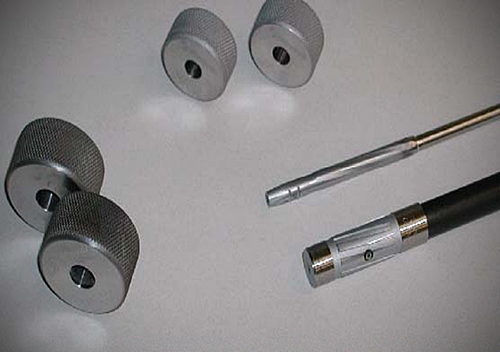
Air gaging is a common technique used in a wide range of manufacturing process. Technicians that work on the shop floor often utilize air gages due to the advantage that the product offers. Air gages are not only easy to use and fast, they can measure to very tight tolerances (down to a resolution of 5-50 millionths!) and even clean the part’s surface before measuring. When it comes to air gaging, most gage users automatically think of air plugs. There are, however, various styles of air forks and air rings. These tools provide similar benefits and a few additional ones too.

The Low-Down on Air Forks

In some cases, you can’t simply place a part in an air ring, e.g. on crankshafts. There are just too many journals and some of them have very tight tolerances. This means that there is no way to place an air ring over this area. This is when you will need an air fork.

You do not get air forks simply by slicing an air ring in half. There are some critical dimensions to consider. In addition, they come with precision-ground locating stops that are found at the back. These features allow the operator to create the reference based on the known part diameter and position the jets with precision.

Maximizing the Capabilities of Air Forks

You can get the air forks to really shine if it’s possible to customize the position of the air jets. For example, you can measure a diameter right up to a face by placing the jets near the end of the fork. Alternatively, you can also add multiple jets to measure up to three diameters simultaneously. You should be able to read the three diameters as one without a lot of computing power. Don’t forget to calculate shape and taper as well.

If you are measuring challenging outer diameters, it is a good idea to remove the mechanical snap or the bench stand and consider leveraging air.

The Low-Down on Air Rings

Air rings are the opposite of air plugs. They are typically utilized to measure outer diameters. These rings often have a basic design, e.g. a steel ring and a pair of jets attached to a particular location. Surprisingly, a lot of engineering is built into them.

If you need to calculate the size of the ring, ensure that you achieve a proper balance of clearance between the opening in the ring and the part. If there is too much clearance (it will measure a chord rather than the diameter), your readout will display a centralizing error. If you lack clearance, a geometry error can occur. In this case, you won’t be able to insert the part into the air tool.

You should check and ensure that the jets are positioned slightly lower than the body of the ring. It provides the air system with the correct differential characteristics to function properly. Additionally, it allows for ring wear.

Diameter Measurements with Air Rings

When it comes to measuring basic diameters, two-jet air rings will suffice. Gears and pullies, however, feature multiple ODs. In most cases, you will need to measure the diameter right up to the face where your rings are attached to. You will need to get a snout-type or shoulder-type air ring. They are basically blind hole rings that allow you to position the jets closely to the face and measure the outer diameter right to its end. Snout type rings can get around obstacles and clearances more efficiently. It is useful to note that air rings may be designed with between three and six jets.

Understanding The Importance Of Air Gage Maintenance

Air Gage Maintenance

Handling large production runs? Need to take high-resolution measurements? An air gage can help! Air gaging currently represents the method of choice for these tasks. Compared to mechanical gages, air gages are pretty reliable and durable. Air gages, however, require a higher level of maintenance. That’s just part of the deal.

Proper Air Gage Maintenance Ensures Accurate Air Gaging

There are two main things you need to do to achieve accurate air gaging. Be mindful of the air supply and properly maintain the tooling. Although you (the gage user) can’t control the factory air supply, you must ensure that the air that reaches your gage is clean, stable in pressure, and dry. It has to be this way because the air lines and compressors may be shared by dozens of other users. Tooling is directly under your control, so there’s no reason not to maintain it!

The Basic Requirement of Maintenance

Air gage maintenance involves keeping the tooling dry and clean inside and out. You cannot let contaminants such as cutting fluid, coolant, dirt, and chips to be picked up from work pieces. Oil and water are known to originate from the air source itself. So, be very careful.

Some air gage users depend on air flow to clear out certain air passages (this can happen on its own). This is not always recommended. You should keep in mind that some contamination may still occur in the measuring jets and master jet. You can throw off the measurement if you allow even a few millionths of an inch of contaminants to accumulate. If you master repeatedly and it produces inconsistent readings, it’s a sign of dirty jets!

Prevents Air Leaks

Air gage inaccuracy is typically caused by air leaks. To confirm your suspicions, observe the indicator needle after covering the measuring jets tightly with your fingers. If the needle does not remain stationary, check all of your connectors, tubes, and fittings for leaks.

Avoids Damaging Sensitive Tooling

Although most factory air lines run at approximately 100 psi, the final amount still depends on other air users’ demands. Air gages that are properly designed should be able to operate reliably between 40 psi and 150 psi. A small amount of fluctuation is acceptable.

It is important to check the sensitivity of your air gages. A part of maintaining them includes isolating them from fluctuations via a semi-dedicated or dedicated air line. With that in mind, sensitivity checks can be conducted by leaving a master in place on the tool. Next, take note of the indicator’s movement while other air line users facilitate normal tasks.

Prevents Moisture Build-Up

The accumulation of water mist and oil can cause moisture to build up. When they do, these elements can act as an abrasive and accelerate part wear over time. Will air dryers work? If you compress air, the process produces moisture. Additionally, the compressor will need lubrication, which will generate oil mist in the line. A better solution is to employ an air line design that intercepts oil and water mist before they enter the meter. You can also consider taking air from the top and not the bottom of the mains. This will prevent moisture from draining into the feed.

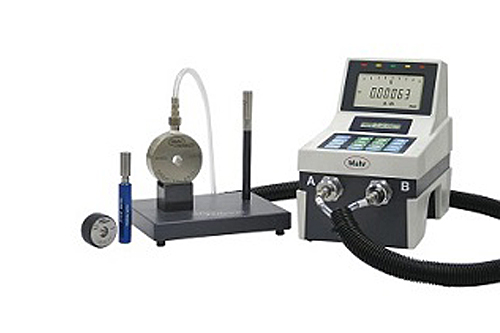
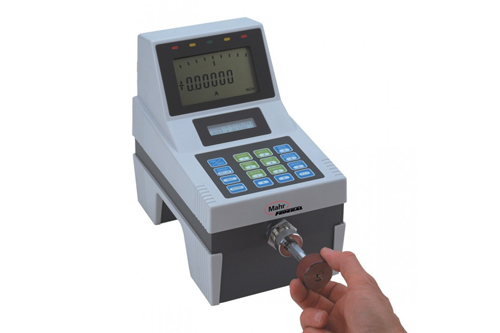
Product Spotlight: Mahr Federal 832 Single Master Digital Dimensionair Amplifier

Mahr Federal 832 Single Master Digital Dimensionair Amplifier

When it comes to precision measurements, a higher degree of resolution is needed in some scenarios. In this case, traditional dial indicators do not make the cut. What you need is an air gaging amplifier. They can make the air gaging process more productive, efficient, and accurate. How do air amplifiers work? Oftentimes, these amplifiers remember the lowest and highest points that are measured on a part. The device may display one or both of these readings. In order to calculate the Total Indicated Reading (TIR) functions, some amplifiers do subtract the Min. from the Max.

If you are looking to get durable and reliable air amplifiers to boost your precision measurement capabilities, you have come to the right place. At Willrich Precision, we carry a comprehensive range of air gaging tools, including the Mahr Federal 832 Single Master Digital Dimensionair Amplifier. In this post, you will find out more about this excellent product and its key features.

About Mahr

Mahr GmbH is the world’s third largest manufacturer of digital calipers, form measuring machines, and other metrology equipment. The company was founded in Esslingen, Germany, in 1861. Although Mahr is a medium-sized family-run business, they are still able to fulfill the metrological needs of a wide range of individuals and organizations around the globe. Today, the Mahr Group employs approximately 1,900 employees.

Features of the Mahr Federal 832 Single Master Digital Dimensionair Amplifier

Here is a quick at some of the top features of the Single Master Digital Dimensionair Amplifier by Mahr:

  • Dual channel, differential unit (great for facilitating critical checks)
  • Selectable metric and inch units
  • Analog scale multiplier for resolution changes
  • Multiplier for scale factor adjustment
  • Actual/preset values
  • Oil-resistant and high-impact housing
  • Selectable passwords
  • Hold and resume function
  • Auto-zero feature (further enhanced by master deviation feature)
  • Digital, analog, and RS-232 outputs
  • From two-jet to six-jet tooling
  • Suitable for manufacturing environments
  • … and more!

Get Mahr Federal 832 Single Master Digital Dimensionair Amplifiers from Willrich Precision!

At Willrich Precision, our team is comprised air gaging experts. They can help you located the perfect air gaging tool for your application in no time. Since our inception, we have achieved a reputation of carrying a wide range of air gages, including 832 Single Master Digital Dimensionair Amplifiers by Mahr Federal. You can enjoy complete peace of mind that we also possess nearly 50 years of experience in the field of metrology, gaging, and inspection. Our company has also supplied metrological equipment to many different industries, including aerospace, medical, pharmaceuticals, technology, automotive, military, energy, and more.

When you choose to shop at Willrich Precision, you will be pleased to know that all of our featured products are competitively priced. You will be hard-pressed to find better deals elsewhere. What’s more, they are built to last and offer exceptional repeatability. The products can also withstand harsh environments, so you can expect that your work will be completed without a hitch.

If you wish to know more about Mahr Federal’s most trusted 832 Single Master Digital Dimensionair Amplifier, do not hesitate to talk to a Willrich specialist today!

Do You Need To Buy A Height Gage?

height gage

A height gage is a measuring instrument designed to measure the height of a workpiece. It features a slider and measuring stylus. These components move relative to a measuring scale that is attached to a beam. They move along a single vertical axis, which is nominally perpendicular to a reference plane. That plane is typically fixed on the instrument base. Today, height gages are a valuable asset when it comes to quality control. If you are looking to get one, you have come to the right place. In this post, you will explore different types of height gages and learn how they work!

Option A: Electronic / Digital Height Gages

The first option that you can consider is a digital or electronic height gage. Digital versions of height gages are divided into three distinct groups:

  • Group one: Height gages in this group often feature data output, floating zero, absolute zero, and metric/inch conversion.
  • Group two: Height gages in this group come with all the first group’s features. The accuracy of the tool, however, is a magnitude of order better. They may also come with additional features such as probe compensation, TIR, max/min, ID/OD measurement, and tolerance setting.
  • Group three: Height gages in this group have all the features that were mentioned in the second group. These gages, however, feature a higher accuracy rating. Most of them also have the ability to store and generate programs, motorized touch probes, air bearings, and computer interfaces (enabling SPC). You can use these height gages to measure a part feature in two dimensions. You just need to rotate the workpiece. Technicians can use gages from this group if they wish to reduce the demand on their CMMs and when higher accuracies are required.

Option B: Mechanical Height Gages

Depending on your company’s budget and needs, you may also consider mechanical height gages. This type of height gage has been utilized in flat plate layouts for many years. The three basic types of mechanical height gages include:

  • Digital counter height gages: The readings are clearer than Vernier scales and often feature dual-digit and dial counters. These features help decrease the time needed to lay out a part. The dual-digit counters can be used as a floating zero or set at the reference datum.
  • Dial height gages: These gages are compact in nature and are often available in sizes below 300 mm or 12 inches. If you are looking to get a personal height gage, this option suits you better. What’s more, it can be easily stored in a machinist’s toolbox.
  • Vernier height gages: These gages can feature one or two scales on the beam (both metric and inch). Their main advantage over other height gages is their height! They are available from six inches to six feet in height.

Now that you have a better understanding of the available types of height gages and their features, it is time to get one! If you can’t decide on which height gage to get, do not hesitate to contact Willrich Precision for advice.

How To Use Air Gages To Measure Squareness

air gages measure squareness

Right angles—perpendicular intersection of surfaces and lines—apply to many things such as manufacturing, agriculture, civil engineering, and architecture. There is an array of terms utilized to explain this relationship, including squareness, normalcy, 90 degrees, and perpendicularity.

When it comes to engineering products, some of them do not feature perpendicular surfaces. In this case, perpendicularity when engineers and technicians need to create dimensions via rectangular coordinates. In the manufacturing industry, the measurement and implementation of right angles are never perfect. It is whether you achieve a higher degree of perpendicularity or not.

Top Tips For Buying Borescopes

buying borescopes

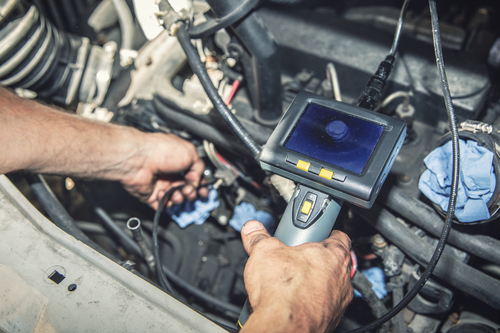
Also known as a boroscope, borescopes are optical devices designed for visual inspection work. These devices are used to measure areas that are inaccessible by other means and to detect imperfections and defects. Borescopes are great alternatives for measurement procedures that require expensive, time-consuming, or destructive dismounting activities. Borescopes are excellent tools to use to inspect automotive engines, diesel engines, truck engines, steam turbines, aeroderivative industrial gas turbines, and aircraft engines. With that in mind, what should you look out for if you want to purchase borescopes? Let’s find out more!

Understanding The Contact Points Of Dial & Digital Indicators

contact points dial digital indicators

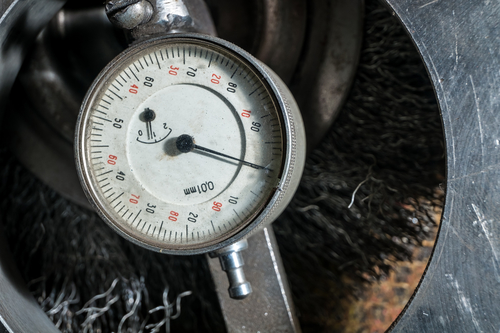
Both dial and digital indicators have contact points. What is a contact point? It is essentially the point of interaction between your part and your tool. It is one of the most important parts of an indicator and comes in a great array of types. Depending on your current needs, these contact points can be replaced or altered in various ways. Let’s find out more about the different types of points (varying by shape) that indicators have.

Product Spotlight: Mahr MarCal 30 EWRi-N Digital Depth Gage IP67 Wireless for Groove measurement

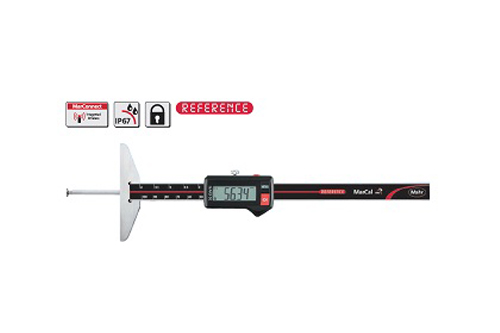
Mahr MarCal 30 EWRi-N Digital Depth Gage IP67 Wireless for Groove measurement

Depth gages are extremely useful hand tools designed to inspect the depth of counterbores, slots, recesses, holes, among others. These tools are widely used by professionals in the tool and die industry. In the past, workers were limited to mechanical scales. In fact, earlier versions of gages comprised a simple rule and a sliding perpendicular beam, which served as the reference. You had to set the scale into the hole you were measuring, and with the slide squared up with the reference surface. The operator had to apply proper technique and employ good judgement. Without those, errors could occur.

Does Your Quality Management System Have An Air Gage?

air gage

Air gages are instruments that are used to measure surfaces by ejecting a stream of air onto the surface, which is then read by sensing nozzles. These sensing nozzles then transfer the readings to a calibrated scale. Air gages are exceptionally good at measuring internal diameters with high precision. The display end of air gages has evolved over time and now allows for digital readings. Modern air gages also have data ports that make it easier to download or transfer of data to computers and other analytical machines for more precise readouts.

Air gaging tools are an important part of a Quality Management System (QMS). Air gages allow a manufacturing process to determine if the quality of products being produced meets set standards. Let’s find out how you can go about incorporating air gages into your QMS.

How To Measure Hex Holes With Go & No Go Gages

go & no go gages

During a manufacturing process, it is often a challenge to measure hexagonal (hex) holes. Hex holes are even harder to measure if they are internal (inside a compartment or object) because of varying reasons such as getting the right tools. This is the reason why Go & No Go gages are so useful in such processes. Typically, to make hex holes, a pilot hole is first done and then the sides are cut out to create the hex shape. The first stage usually presents few problems as a pilot hole is relatively easy to gage (such as with an air gage for example). The harder part comes when you are doing the sides as these usually determine how well the hex hole will fit into its intended part.

Appreciating The Flexibility Of Air Gaging

air gaging flexibility

Gaging is a form of measurement where the object under study is compared against a set standard (a gage) and its precision determined by the extent of its deviation from the gage. This is a contrast to direct measuring where a tool simply measures the object in a direct reading process. There are different forms of gaging of which air gaging is one of them. Gaging works well in environments where a high degree of precision and speed is required. In general, gaging processes are faster than conventional measurement processes and yield a high degree of precision. Within the gaging world, different approaches to gaging are utilized depending on needs and requirements.

Product Spotlight: Mitutoyo Surftest SJ-210 178-561-02A Surface Roughness Tester

Mitutoyo Surftest SJ-210 178-561-02A Surface Roughness Tester

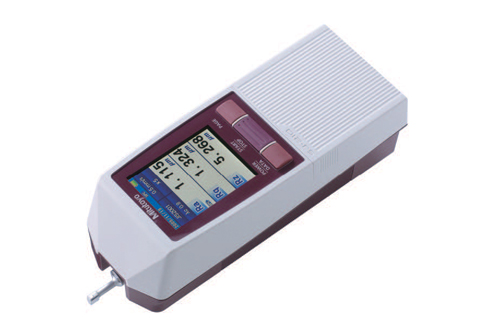
Surface roughness indicates how an object will interact with its environment. Irregularities on a certain surface may form nucleation sites for corrosion or cracks. The tool that is used to measure roughness is called a surface roughness tester. These testers are usually utilized in industrial inspection rooms, shop floors, etc. One of the best brands of surface roughness testers is Mitutoyo, particularly their Surftest series testers. If you are looking to get the Mitutoyo Surftest SJ-210 178-561-02A Surface Roughness Tester, look no further than Willrich Precision. We carry a comprehensive range of precision measuring instruments, including Mitutoyo products.